For parents who want their children to stay close
Keep your family close after you've gone.
Your will decides who gets what. It doesn't tell your children why, or help them talk about it. The Beaumont Family Legacy System walks your family through those conversations, step by step, so nobody is left guessing and nobody is left fighting.
Instant download. 365-day money-back guarantee.
Not ready for the full System? Start with the 60-Minute Emergency Binder · $29. It counts toward the System if you upgrade later.
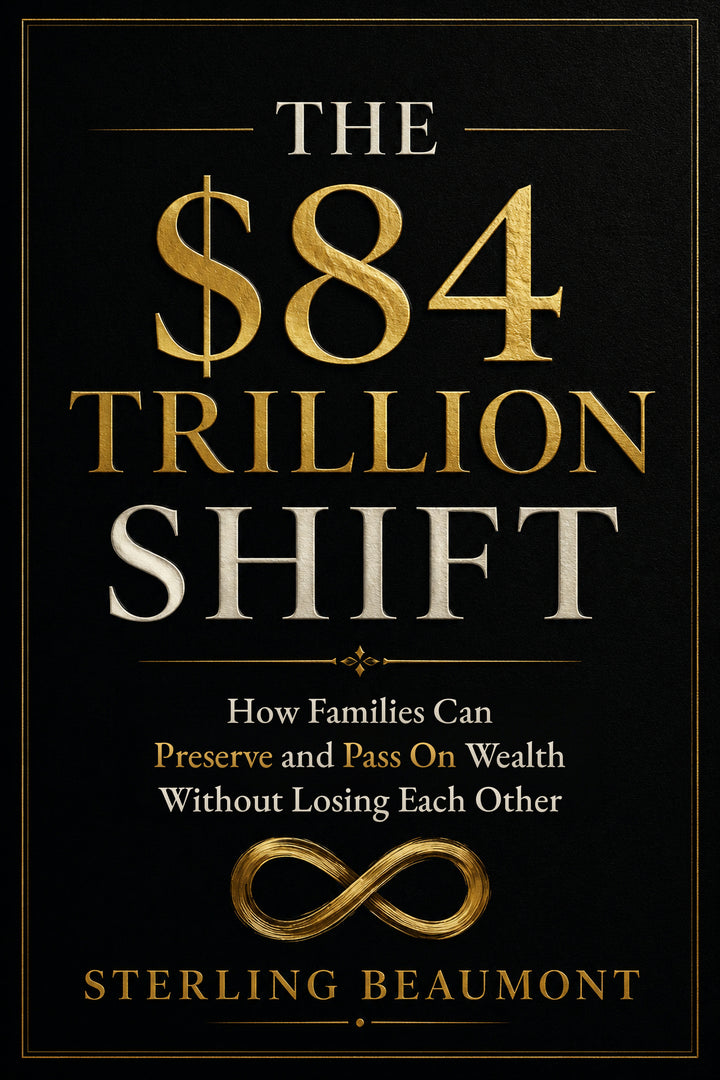
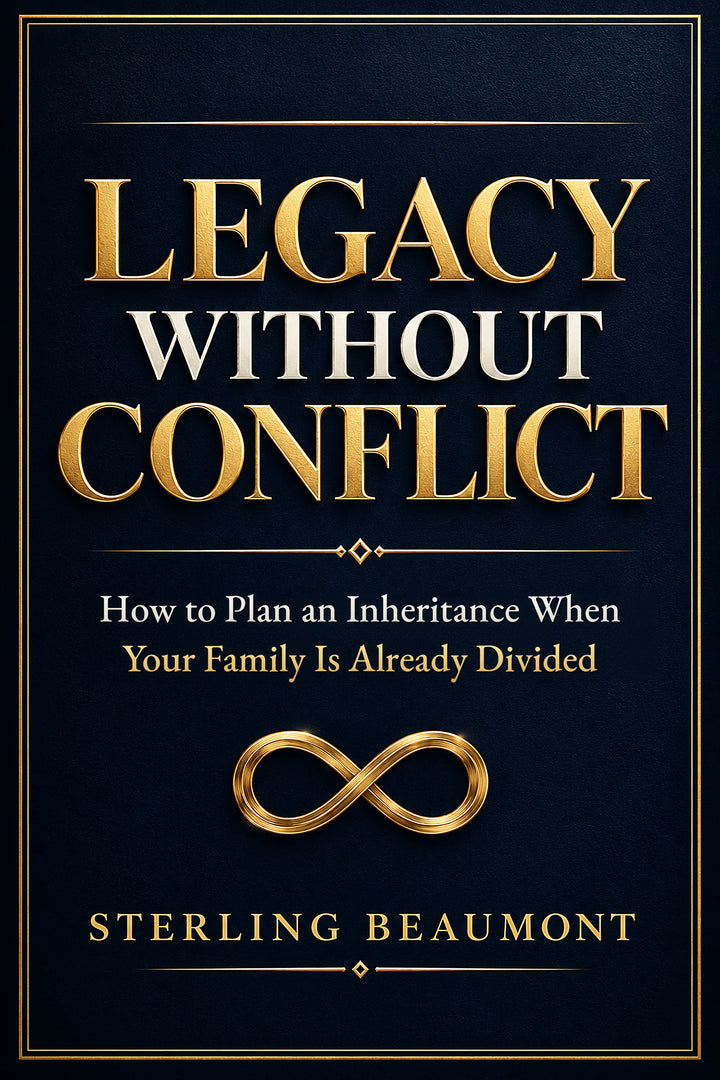
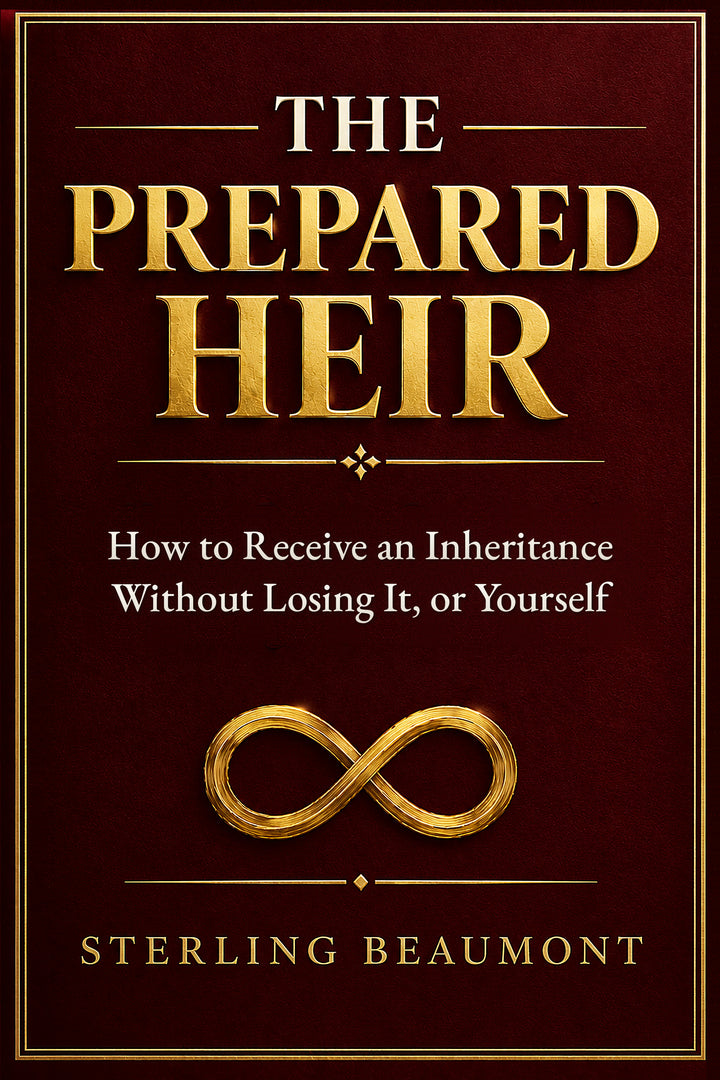
Built on The Beaumont Legacy Series, three books for parents, divided families and heirs, on Amazon.
The Legacy Conversation Toolkit
The conversations that shouldn't wait for a crisis.
A free eight-page guide: three questions to answer first, a ten-point family readiness check, and seven conversations, each with an opening question you can ask word for word. About thirty minutes.
ABOUT THE TOOLKIT →How it works
Three steps. About twelve weeks.
Step 1
Find out where you stand.
Tonight, on your own, take the 20-minute readiness assessment. It shows which of the five areas your family needs to work on first.
Step 2
Hold the first family meeting.
Use the timed agenda, the ground rules and the opening words, so it stays calm and nobody is ambushed.
Step 3
Sign your family plan.
A family values statement, a plan to prepare each heir and a 90-day plan, written and signed together. Then your children know what you wanted, and why.
The Beaumont Family Readiness Check
Where does your family stand?
Eleven statements about your family's plans and conversations. In about two minutes you'll get a score out of 100 and see how your family measures on each of the five pillars, from Clarity to Stewardship.
Free and anonymous. No sign-up needed to see your score.
One decision. Three professionals. One answer.
Should your children inherit equally?
Robert's will split everything three ways. Equal is equal, said Michael. Then Sarah asked about the $80,000 their father had given Michael to start his business fifteen years earlier. Then Jennifer asked whether the five years she had spent driving him to the cardiologist were in the spreadsheet.
Each of them was right about something. The will was equal. To each child, it was also unfair, in a different way. Here is how three professionals look at the same decision, and why none of them alone is enough.
Legal
The estate attorney asks: is it clear?
You can leave your children different amounts. What causes trouble is ambiguity. Was the $80,000 a gift, a loan, or an advance on Michael's share? Nothing was written down, so after Robert's death it became whatever each child needed it to be. The fix: say in writing which lifetime gifts count, consider a paid caregiver agreement for Jennifer during Robert's life, and record the reasons for any unequal share.
Financial
The adviser asks: is it really equal?
Equal dollars are not always equal value. Withdrawals from an inherited traditional IRA are generally taxed as income, except for any after-tax contributions. An inherited house usually takes a new basis at its value on the date of death, so much of the earlier gain may never be taxed, subject to the rules and exceptions. Give one child the IRA and another the house in equal face amounts, and they may not be treated equally. The fix: list every significant gift, have an adviser and tax professional compare the shares after tax, and use life insurance or specific bequests to balance an uneven estate.
Human
The family therapist asks: what will each child hear?
Children rarely experience their share as money. They experience it as a measure of how they were seen. Michael hears “you're being punished for succeeding.” Jennifer does not want payment; she wants her brother and sister to hear their father say he noticed. Families accept unequal plans they understood in advance far better than equal plans that hide something. The fix: decide, then tell all three together, while Robert can still answer questions.
The Beaumont answer
Agree what fair means first. Then do the numbers. Then explain both while you're still here.
One way Robert could have done it: count the $80,000 as an advance on Michael's share, set aside $60,000 to recognise Jennifer's care, and divide the rest equally. Michael receives $326,667 from the estate, Sarah $406,667, Jennifer $466,667. Counting what he has already had, Michael and Sarah are treated the same. Jennifer receives more, and everyone knows why.
Two months after the funeral, Jennifer sends her siblings the spreadsheet. The shares are not equal. Nobody calls anyone. They saw these numbers at their parents' kitchen table years ago, and their father explained every line.
The spreadsheet does not start a fight, because it does not contain a surprise.
Every decision chapter in The $84 Trillion Shift works this way: the legal view, the financial view, the human view, and one decision you can act on.
Robert's family is a composite. The figures are an illustration from Chapter 8, not a recommendation; an attorney and adviser would need to check any plan against state law and the family's taxes.
The Beaumont Legacy Series
You’ve prepared your wealth for your children.
Have you prepared your children for your wealth?
For the parent
The $84 Trillion Shift
Make the ten decisions that help keep your children close, and still speaking to each other, after you’re gone.
For the divided family
Legacy Without Conflict
Plan an inheritance even when your family is already divided, so a hard situation doesn’t become a lasting rift.
For the heir
The Prepared Heir
Receive an inheritance without losing it, or yourself: the deadlines, the taxes, the family, and the people who ask.
For Professionals
Resources for the people who guide families through wealth transition.
For estate-planning attorneys, wealth advisers, family offices, private banks, CPAs and other professionals working with families whose wealth will eventually change hands.
EXPLORE PROFESSIONAL RESOURCES →- Estate Planning
- Wealth Management
- Family Offices
- Private Banking
- Tax & Accounting
- Advisory
About
About Sterling Beaumont
Sterling Beaumont is an author and framework builder focused on the intersection of wealth, family, human behaviour, inheritance, communication and stewardship. The Beaumont System and the Legacy Series set that thinking out in practical form.
READ MORE →Wealth is transferred through documents. Legacy is transferred through people.
Families rarely fight over a plan they understood. They fight over surprises.
Start tonight, in about 20 minutes.